7 Leadership Training Programs for Technical Experts


Last Updated: November 4, 2026
Quick Summary
Effective leadership training for technical experts teaches frameworks you can apply to live problems, then pairs them with coaching afterward so the frameworks become habits. Programs without structured follow-up tend to fade within weeks, which is why we build one-on-one coaching into every Leadership Bridge engagement.
- Leadership debt is the accumulation of avoided conversations and undelegated work that compounds over time.
- We scored programs on usable frameworks, follow-up coaching, technical specificity, and fit with busy schedules.
- Identify whether you are moving to first-line manager, technical lead, or leader of leaders before comparing providers.
- Ask how many coaching sessions follow the formal training and over what period.
- Programs that end on the workshop’s last day without coaching produce enthusiasm that fades within weeks.
Table of Contents
- Why Leadership Training for Technical Experts Fails Without Follow-Up Coaching
- How We Evaluated These Leadership Training Programs
- 1. Leadership Bridge: The Bridge Method™ for Individual Contributors Moving Into Management
- 2. AMA Leadership Skills and Team Development for Technical Professionals
- 3. Vistage Executive Coaching: Peer Advisory for Senior Technical Leaders
- 4. Harvard Professional Executive Leadership Programs: Academic Strategy for Technical Experts
- 5. MAP Consulting Leadership Programs: Immersive Training With Structured Accountability
- 6. CTO Academy Technology Leadership Programs: Governance Plus People Management
- What to Look For in Leadership Training for Technical Experts
- Why Leadership Training for Technical Experts Fails Without Follow-Up Coaching
- Frequently Asked Questions
Why Leadership Training for Technical Experts Fails Without Follow-Up Coaching
The failure mode is predictable. A technical expert learns a delegation framework, returns to a deadline crunch, and takes the task back because it is faster to do it themselves. Without a coach asking why, the pattern hardens. The framework was never the problem; the missing follow-up was.
Leadership debt: the technical concept that explains the failure
Technical leaders already understand technical debt: shortcuts taken today that cost more to fix later. Leadership development has an equivalent.
A technical expert who avoids a performance conversation because the deadline is close is taking on leadership debt.
Training without coaching tends to increase leadership debt rather than reduce it. Participants learn the right framework, feel motivated, then return to an environment where old shortcuts are still rewarded.
Psychological safety is a technical leadership skill, not a soft extra
Most leadership training for technical experts treats psychological safety as a general management topic, if it covers it at all. In technical teams, especially remote and hybrid ones, it is closer to an engineering requirement.
A framework helps.
But a framework alone does not change behavior. Coaching is what helps a technical leader notice when they are shutting down dissent, interrupting in a review, dismissing a concern too quickly, or rewarding only the people who agree.
The loop that makes training stick
The difference between training that works and training that fades is what happens after the workshop ends. A common mistake is treating leadership development as an event.
The Center for Creative Leadership’s research on leadership development has long argued that experience and feedback drive most leadership growth. That points to a simple conclusion: any program without structured follow-up is leaving most of its value on the table.
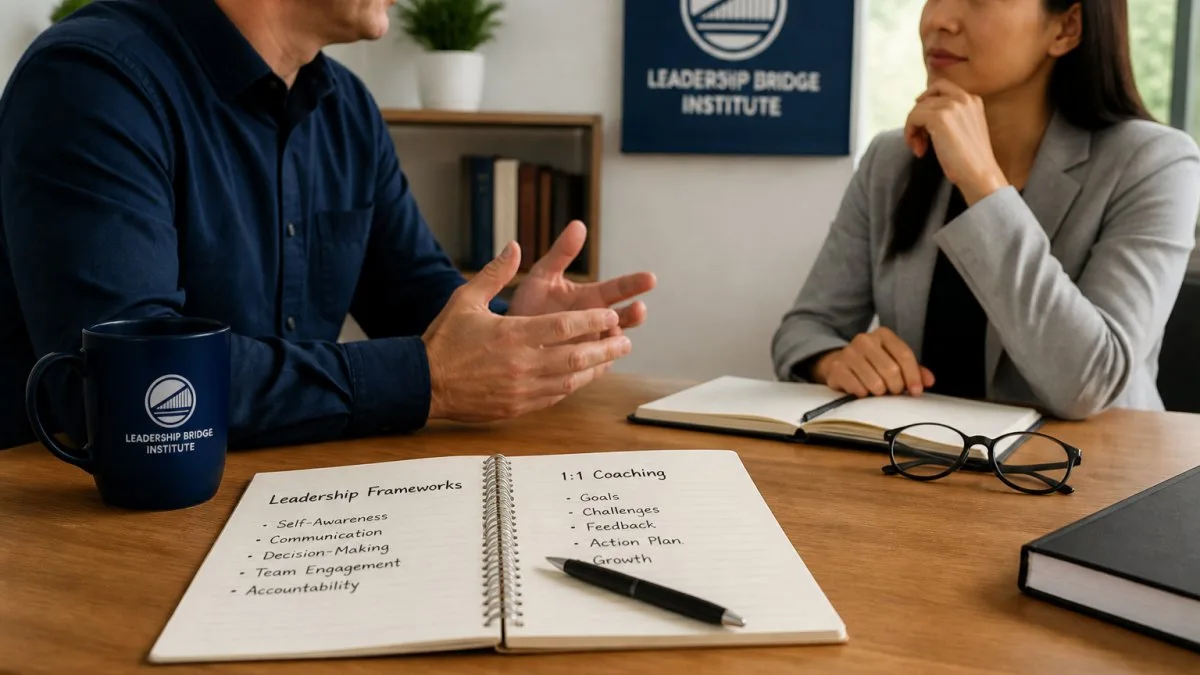
Coaching changes the loop in three concrete ways. First, it gives you a place to examine what actually happened when you applied the framework. Second, it helps you adjust the framework to your specific team instead of abandoning it when the first attempt goes badly. Third, it creates accountability, someone will ask next week whether you had the conversation you were avoiding.
That is why we build one-on-one coaching into every Leadership Bridge engagement rather than treating it as an extra. For readers who want to see how different coaching formats work in practice, compare coaching formats for engineers. If the sticking point is delegation specifically, learn how to delegate as a technical lead.
How We Evaluated These Leadership Training Programs
We scored each program on four criteria: whether it teaches usable frameworks, whether coaching continues after the formal training, how specific it is to technical professionals, and how well it fits busy working schedules.
For readers who want a side-by-side view of formats, duration, and selection criteria before choosing, compare the best leadership development programs for engineers moving into management.
| Program | Core Approach | Follow-Up Coaching | Best For |
|---|---|---|---|
| Leadership Bridge | Framework teaching plus one-on-one coaching | Yes, with 90-day guarantee | Technical experts moving into management |
| AMA | Course-based skill building | Limited | Individual contributors entering management |
| Vistage | Peer advisory groups | Yes, ongoing | Senior technical leaders |
| Harvard Professional | Academic strategy programs | No | Strategy-focused senior experts |
| MAP Consulting | Immersive workshops with accountability | Yes | Results-driven leaders |
| CTO Academy | Tech-specific leadership curriculum | Mentorship included | CTOs and technical leads |
1. Leadership Bridge: The Bridge Method™ for Individual Contributors Moving Into Management
Leadership Bridge addresses the follow-up problem directly.
The program is built for engineers and scientists stepping into management, project managers bridging technical execution and strategic leadership, and senior leaders in government, healthcare, and manufacturing building leadership pipelines.
Coaching is a key part of the program. If you are weighing this against a well-known alternative, see CCL vs Leadership Bridge: Choosing Management Training.
Best for: technical experts moving from individual contributor to manager.
Skip if: you want a purely academic credential with no coaching component.
2. AMA Leadership Skills and Team Development for Technical Professionals
Where it falls short is depth of follow-up. The course is a dedicated block of time away from technical duties, and after it ends, ongoing coaching is limited. That makes it a solid starting point but a weaker fit if you need sustained support through the first year of managing people.
3. Vistage Executive Coaching: Peer Advisory for Senior Technical Leaders
The trade-off is time. Monthly meetings plus coaching require a real commitment, and the model suits people who already have leadership experience to bring to the group. If you are earlier in the transition, the peer format may feel ahead of where you are. For readers comparing executive coaching options with guarantees and outcomes, see how the top programs compare.
4. Harvard Professional Executive Leadership Programs: Academic Strategy for Technical Experts
The gap is day-to-day management. These programs focus on complex organizational strategy rather than the immediate challenges of running a technical team: one-on-ones, delegation, and performance conversations. They suit senior experts who already manage teams well and want to sharpen strategic thinking.
5. MAP Consulting Leadership Programs: Immersive Training With Structured Accountability
The intensive format is the main drawback for busy technical professionals, since it demands significant time away from delivery work. If you can protect the calendar space, the accountability structure gives it a better chance of sticking than a passive course.
6. CTO Academy Technology Leadership Programs: Governance Plus People Management
Its niche focus is also its limit. Leaders in manufacturing, healthcare administration, or government engineering roles may find the software-centric framing less relevant to their day-to-day work.
What to Look For in Leadership Training for Technical Experts
The right program teaches frameworks you can apply to a real problem this week, then coaches you through the result. Combining usable frameworks with structured coaching afterward is the approach that helps training stick. Use this checklist before you enroll:
- The program teaches a named, repeatable framework rather than general advice
- Coaching continues after the formal training ends, with a defined cadence
- Content is specific to technical professionals, not generic management
Match the program to the transition you are actually making
Technical experts do not all need the same training. Before you compare providers, identify which of these three transitions you are in, because each demands different frameworks and different coaching questions:
- Individual contributor to first-line manager. Your core challenge is delegation and letting go of the work that made you valuable. Look for frameworks for running one-on-ones, assigning ownership, and giving feedback on technical work you could still do yourself. Coaching should focus on the moments you are tempted to take the task back.
- Senior engineer or architect to technical lead without direct reports. Your challenge is influence rather than authority. Look for frameworks for stakeholder management, decision documentation, and cross-team communication. Coaching should focus on how you build credibility when you cannot rely on a title.
- Manager to leader of leaders. Your challenge is building other managers, not doing the work. Look for frameworks for coaching your own reports, setting strategy, and managing across functions. Coaching should focus on the organizational patterns you can no longer see from inside delivery.
A program built for transition one will feel remedial in transition three, and a program built for transition three will skip the delegation mechanics that transition one depends on. Ask the provider which transition their curriculum was designed around.
The dual-track question: will this training push you off the technical path?
Many technical experts hesitate to invest in leadership training because they fear it signals a one-way move into management, away from the work they love.
Modern technical organizations increasingly run dual-track career paths: an individual contributor track (senior, staff, principal, distinguished engineer) and a management track (manager, director, vice president).
When you evaluate a program, ask whether it treats leadership as a management-track skill or as a capability that applies to both tracks.
Watch for the burnout signal
High-performing technical experts are prone to a specific pattern: they are so good at absorbing complexity that they become the bottleneck for every hard problem, and the resulting workload is unsustainable.
Ask whether the program addresses workload sustainability and boundary-setting as leadership skills, not as wellness afterthoughts. A framework for delegation is also a framework for protecting your own capacity.
Questions to ask before you commit
- What named framework will I leave with, and can I see it before I enroll?
- How many coaching sessions follow the formal training, and over what period?
- Who delivers the coaching, a generalist facilitator or someone who has led technical teams?
- How does the program handle the delegation problem specifically, since that is where most technical experts stall?
Watch out: programs that end on the last day of the workshop without any coaching component tend to produce enthusiasm that fades within weeks. Ask specifically how follow-up works before you commit, and be wary of answers that describe follow-up as optional or self-directed.
Why Leadership Training for Technical Experts Fails Without Follow-Up Coaching
The failure mode is predictable. A technical expert learns a delegation framework, returns to a deadline crunch, and takes the task back because it is faster to do it themselves. Without a coach asking why, the pattern hardens.
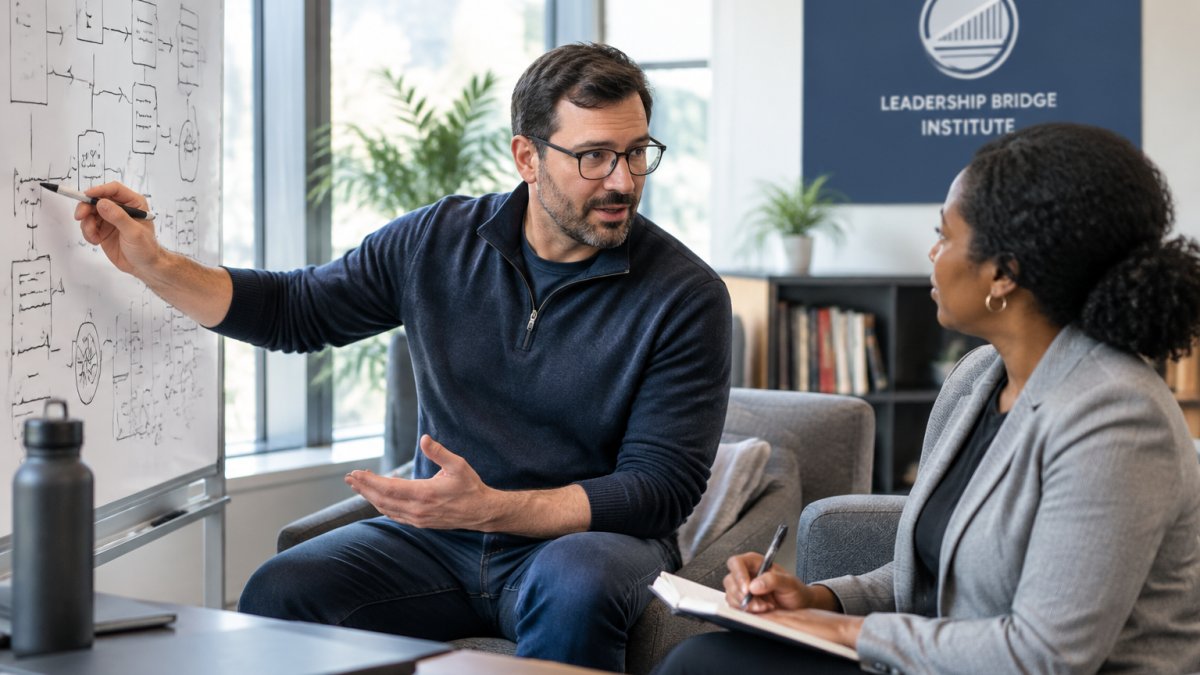
Coaching changes that loop. Teaching frameworks first and coaching afterward gives you a place to examine what happened, adjust the framework to your team, and try again with support.
Frequently Asked Questions
What is the biggest challenge for technical experts transitioning to leadership?
The hardest shift is moving from doing the work yourself to getting results through others. Engineers and scientists are trained to solve problems directly, so delegating feels slower and riskier at first. Leadership training that pairs practical frameworks with ongoing coaching helps technical experts practice delegation, communication, and conflict management until those habits replace the instinct to jump in and fix everything personally.
How does the Bridge Method™ support technical experts in leadership roles?
The Bridge Method™ is a systematic four-step approach built over 36 years of leadership experience. It teaches frameworks technical experts can apply immediately, then reinforces them through expert-led coaching and one-on-one support. That combination matters because a framework explains what to do, while coaching makes sure you actually do it when team dynamics and pressure push you back toward old habits.
Why is coaching essential after leadership training for technical professionals?
A workshop can teach a framework in a day, but applying it to your real team, stakeholders, and deadlines is where most training fades. Follow-up coaching for technical leaders provides accountability, feedback on live situations, and course correction. Leadership Bridge teaches frameworks first and then provides one-on-one coaching afterward, backed by a 90-day confidence guarantee.
What leadership frameworks are most effective for technical managers?
The most useful leadership frameworks for engineers and technical managers focus on delegation, communication styles, conflict management, and stakeholder management. Frameworks work best when they are simple enough to recall mid-meeting and paired with practice. Look for programs that teach a repeatable model, then provide coaching sessions where you apply it to your actual projects and team situations rather than case studies alone.
How do you balance technical expertise with people management?
Balance comes from deliberately shifting your identity from individual contributor to leader. Stay technically credible enough to ask good questions, but hand execution to your team and spend your time on team development, decision-making, and cross-functional collaboration. Leadership training for technical experts helps by teaching frameworks you can apply immediately, with coaching afterward to keep you accountable when the urge to do everything yourself returns.
If the training you have tried before never stuck, the missing piece was probably not the content. It was the coaching that turns a framework into a habit. Leadership Bridge teaches frameworks technical experts can apply immediately, then supports you with expert-led coaching, one-on-one sessions, and a 90-day confidence guarantee so the change holds under real pressure. Get started with Leadership Bridge and lead your team with confidence.

Captain JC Carter, U.S. Navy (Retired), brings 36 years of leadership experience to helping technical experts become the leaders people want to follow through The Bridge Method™.
More about JC →