7 Best Leadership Training Options for Government Officials

Last Updated: November 21, 2026
Quick Summary
The best leadership training for government officials depends on career stage, public-sector fit and follow-up support. Federal employees can start with the OPM catalogue, state and local leaders can consider Partnership for Public Service programs, and technical experts moving into leadership may benefit from Leadership Bridge's coaching-based approach. Match the program to the leader's needs before committing budget.
- Start with the Federal Leadership Development Programs catalogue to compare options across federal agencies.
- Ask every provider what they measure after the program ends and whether they follow up with participants.
- Check that a program covers ethics, budgeting, labor relations and cross-agency collaboration before enrolling.
- Confirm agency approval steps early, since purchase orders or training requests can add weeks to a start date.
Table of Contents
- How We Chose These Leadership Training Options
- Quick Comparison: Leadership Training for Government Officials at a Glance
- 1. Federal Leadership Development Programs (FedLDP) Catalogue: Best for Finding Federal Options
- 2. Partnership for Public Service Open Programs: Best for State and Local Leaders at Every Level
- 3. The Leadership Academy (CSG Eastern Regional Conference): Best for Early-Career State Officials
- 4. Management Concepts Leadership and Management Training: Best for Mission-Focused Government Teams
- 5. Online Leadership Training for Public Managers (GovLeaders.org): Best Free Starting Point
- 6. Leadership Bridge: Best for Technical Experts Moving into Government Leadership Roles
- 7. Choosing the Right Leadership Training for Government Officials
- Frequently Asked Questions
How We Chose These Leadership Training Options
Government officials face a specific leadership challenge. They manage budgets, public expectations and large teams under heavy scrutiny. We used a practical lens to judge which programs actually prepare public-sector leaders for the job, not just for a course certificate.
We looked at who each program serves, how it is delivered, whether it includes follow-up support, and whether it fits federal, state or local government. We also considered whether a program helps leaders apply what they learn at work.
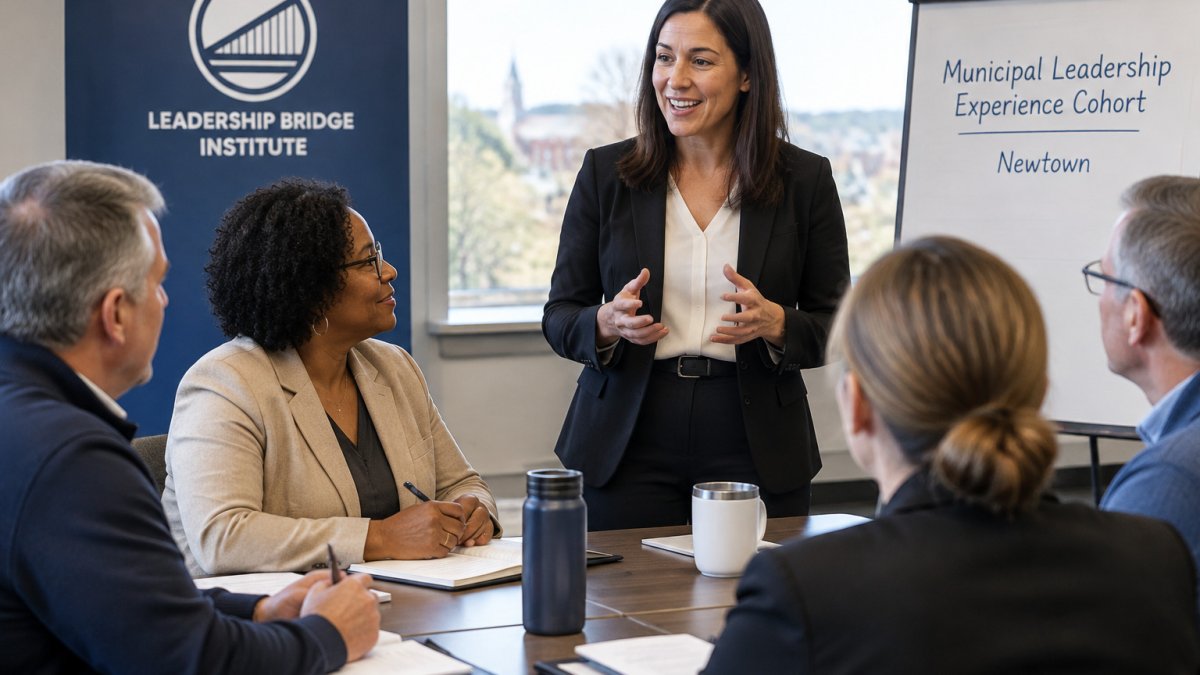
Our own experience shaped one of the criteria. When I trained municipal leaders during my Municipal Leadership Experience Cohort for the town of Newtown, the gap I saw most often was not a lack of knowledge. It was the distance between a session and a change in daily practice. We weighted programs that address that gap.
Quick Comparison: Leadership Training for Government Officials at a Glance
Most lists of leadership training for government officials stop at a program name and a one-line description. Officials choosing training need more: who the program is actually built for, how it is delivered, how long it runs, what credential it produces, and how to pay for it through agency channels. The table below compares the options in this guide on those practical dimensions.

| Program | Best For | Career Stage | Typical Format | Duration | Credential | Funding Path |
|---|---|---|---|---|---|---|
| Federal Leadership Development Programs Catalogue | Federal employees comparing agency options | All levels | Searchable catalogue of agency-run programs | Varies by listing | Varies by program | Agency training funds; confirm with your training office |
| Partnership for Public Service Open Programs | State and local leaders and political appointees | Aspiring supervisors through senior executives | Cohort-based open enrollment | Multi-session programs | Program certificate | Agency professional-development funds; request details |
| The Leadership Academy (CSG Eastern Regional Conference) | Early-career state officials and legislative staff | Early career | Conference-linked academy | Runs alongside the regional conference | Academy completion | State legislative or agency training budgets |
| Management Concepts Leadership and Management Training | Mission-focused government teams | Current and emerging leaders | Instructor-led courses, in-person and online | Course-by-course | Course certificates | Agency procurement and training funds |
| GovLeaders.org Online Training | Public managers testing the waters | Managers | Online resources and listed courses | Self-paced | None standardized | Free resources; paid options vary |
| Leadership Bridge | Technical experts moving into government leadership | Transition to leadership | Cohort plus one-on-one coaching and peer groups | Multi-week engagement with follow-up | Completion plus coaching | Agency professional-development funds; contact for details |
Three patterns stand out when you read the table by career stage rather than by program name. First, the federal catalogue is a starting point, not a course, it helps federal employees see what their own agency already funds, which is often the fastest route to approval. Second, state and local officials may have different enrollment options than federal staff, so programs that accept political appointees and career staff in the same cohort may be worth considering for pipeline building. Third, free and low-cost resources are useful for testing appetite, but they rarely include the follow-up that turns a session into a habit.
Watch out: a program listed as "government-focused" may still be built around private-sector case studies. Ask for a sample agenda before you commit training funds.
On funding, most public-sector training is paid through agency training budgets, professional-development allotments, or procurement processes rather than individual registration. Confirm early whether your agency requires a purchase order, a supervisor approval, or a training-request form, because those steps can add weeks before a cohort start date. Pricing for these programs depends on the provider, format, and dates, so request a quote that separates tuition, materials, and any coaching component.
Use the table as a shortlist tool, not a verdict. The sections that follow explain what each program does well and where it fits in a leader's career arc.
1. Federal Leadership Development Programs (FedLDP) Catalogue: Best for Finding Federal Options
The Office of Personnel Management hosts a searchable catalogue of leadership programs offered by federal departments and agencies, which makes it a logical first stop for federal employees. The catalogue itself is not a course, so expect to compare several listings before choosing one. Look at each program's audience and format, then check with your agency's training office about approval and funding.
Best for: federal employees who want to see every option across agencies before committing.
2. Partnership for Public Service Open Programs: Best for State and Local Leaders at Every Level
This program serves state and local government employees from aspiring supervisors through senior executives. The range of seniority makes it useful for agencies building a leadership pipeline across several levels.
Best for: state and local agencies developing leaders at several career stages at once.
3. The Leadership Academy (CSG Eastern Regional Conference): Best for Early-Career State Officials
The Leadership Academy is aimed at people early in their careers. If your next leader is a young legislative staffer or a new state official, this academy fits that path. Curriculum and delivery format are not described in detail, so confirm them before enrolling.
Best for: early-career state officials and legislative staff.
4. Management Concepts Leadership and Management Training: Best for Mission-Focused Government Teams
Best for: government organisations wanting one provider for leadership and management courses.
5. Online Leadership Training for Public Managers (GovLeaders.org): Best Free Starting Point
If budget is the first constraint, GovLeaders.org is one place to look for online leadership resources. Read each resource's terms before assuming no cost.
Best for: public managers who want a free starting point before investing in a paid program.
6. Leadership Bridge: Best for Technical Experts Moving into Government Leadership Roles
Leadership Bridge helps technical experts make the move from individual contributor to leader. Our approach is the Bridge Method, a four-step process of Assess, Train, Perform, and Review. At Leadership Bridge, we teach practical leadership and management frameworks, then coach participants as they apply them in their actual work.
At Leadership Bridge, we provide one-on-one executive coaching and moderated peer group sessions, so coaching happens alongside the work. Pricing depends on the number of participants, dates and delivery format, so contact us for a quote.
Best for: technical experts moving into government leadership who want follow-up coaching after training.
Skip if: you only need a short, one-time course with no coaching.
7. Choosing the Right Leadership Training for Government Officials
Most guides to leadership training for government officials end with a list. The harder question is which program fits a specific leader at a specific point in their career, and how to tell whether the training produced a change once it is over. This section answers both, using the career-stage lens that most published program catalogues leave out.
Match the program to the career stage
New supervisors and frontline managers. The first move into supervision is where most public-sector leaders struggle, because the skills that earned the promotion, technical expertise, reliability, subject knowledge, are not the skills the new role demands.
Mid-career managers. At this stage the gap is usually cross-agency collaboration and budget fluency rather than basic supervision. Programs that mix career staff with political appointees are valuable here, because that is the working relationship mid-career managers actually navigate.
Senior executives and appointed officials. Senior leaders often benefit more from peer exchange, crisis decision-making, and accountability under scrutiny than from skills instruction. Cohort-based programs with sustained peer groups can be a strong fit at this level, which is why follow-up structure matters alongside curriculum breadth.
Elected and appointed officials. Officials who arrive through election or appointment often need orientation to public-sector ethics, labor relations, and budgeting rather than general leadership content.
Technical experts moving into leadership. This is the transition I know best. When I trained municipal leaders during my Municipal Leadership Experience Cohort for the town of Newtown, the pattern I observed was that the gap was not a lack of knowledge.
Evaluate public-sector fit, not just leadership content
Generic leadership training rarely addresses the conditions government officials actually work under. Before committing, check whether a program covers:
- Ethics and public accountability, conflicts of interest, transparency obligations, and decision-making under public scrutiny.
- Political transitions, how to lead through changes in administration, council composition, or agency leadership without losing institutional knowledge.
- Labor relations, working with unions, managing grievances, and negotiating within collective bargaining agreements.
- Budgeting, building and defending a budget, and making cuts that survive public review.
- Crisis response, incident command, public communication, and cross-agency coordination under time pressure.
- Cross-agency collaboration, the joint work that most public problems require and most training ignores.
A program that skips these topics is teaching leadership in the abstract. Ask providers for a sample agenda and look for these themes by name.
Look for evidence of outcomes, not just completion
The weakest signal in any training decision is a certificate of completion. The stronger signals are whether participants get promoted, whether they stay, whether their teams report better engagement, and whether service delivery improves. Most providers do not publish this data, so ask directly: What do you measure after the program ends? Do you follow up with participants three, six, or twelve months later? Can you share examples of what changed at work?
Learning often fades unless something reinforces it, so programs with coaching, peer groups, or structured review sessions may hold up better over time. That follow-up structure is central to Leadership Bridge's design, and it is a question worth asking of every provider on this list.
Confirm the logistics before you commit
Practical constraints decide more training choices in government than curriculum does. Confirm the time commitment per session, whether any part is asynchronous, whether the cohort meets in person or online, and whether there are prerequisites or eligibility rules. Check accessibility accommodations and geographic availability, especially for rural agencies and staff who cannot travel.
Watch out: a cohort start date that falls in the middle of budget season or an election cycle is a completion risk. Check the calendar against your agency's busiest periods before enrolling.
The right program is the one that matches the leader's stage, addresses the public-sector conditions they work in, and includes a mechanism for making the learning stick. Use the career-stage guidance above to narrow the list, then ask every provider the outcome and logistics questions before you commit training budget.
Leadership Bridge works with technical experts and public-sector teams who are moving into leadership roles. Our coaching helps you apply the lessons from training to real decisions at work. Contact us to talk about which path fits your leaders.
Frequently Asked Questions
What are the best leadership trainings available for government officials?
The strongest options depend on your level and jurisdiction. Federal employees can search the OPM Federal Leadership Development Programs catalogue, state and local officials can look at Partnership for Public Service open programs, and early-career state staff may look at the Leadership Academy. Technical experts moving into government leadership roles may also consider Leadership Bridge. Compare format, audience, and current pricing directly with each provider before deciding.
Are there free leadership training programs for government officials?
Yes, some options may be free. The Federal Leadership Development Programs catalogue can be searched for federal options, and GovLeaders.org gathers online leadership training information for government employees. Free resources are a good way to build foundations, but they usually do not include the coaching, cohort work, or accountability of paid programs. Confirm whether any linked course carries a fee before enrolling.
How do you choose leadership training for local government officials?
Start with your career stage. Aspiring supervisors, mid-level managers, and senior executives need different content, so look for programs that name their target audience. Check whether the program is designed for state and local government, since many leadership courses are written for federal settings. Ask about delivery format, whether the training includes follow-up coaching, and how participants apply what they learn on the job. Request current pricing and eligibility details from each provider.

Captain JC Carter, U.S. Navy (Retired), brings 36 years of leadership experience to helping technical experts become the leaders people want to follow through The Bridge Method™.
More about JC →